
Professional office
Discover our wide range of professional desks : individual and multi-user, corner, mobile, arched or trapezoidal, sit-stand, electrically or manually adjustable, stylish and ergonomic, modular, prestigious, understated… As you can see, with Buronomic you have a choice of 15 customizable desk. Professional furniture made in France, certified, and guaranteed for 5 to 10 years.
-
Collaborative desks
-
Ergonomic desks
-
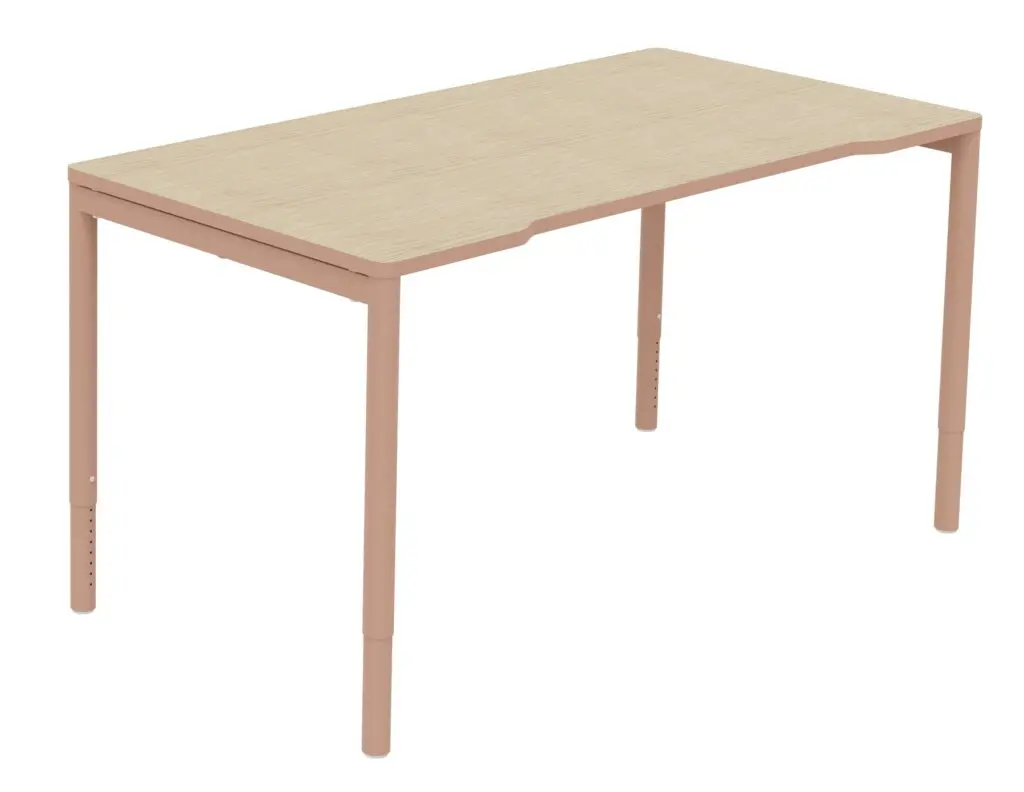
Nuanza RH mechanical
Mechanically height-adjustable desks -
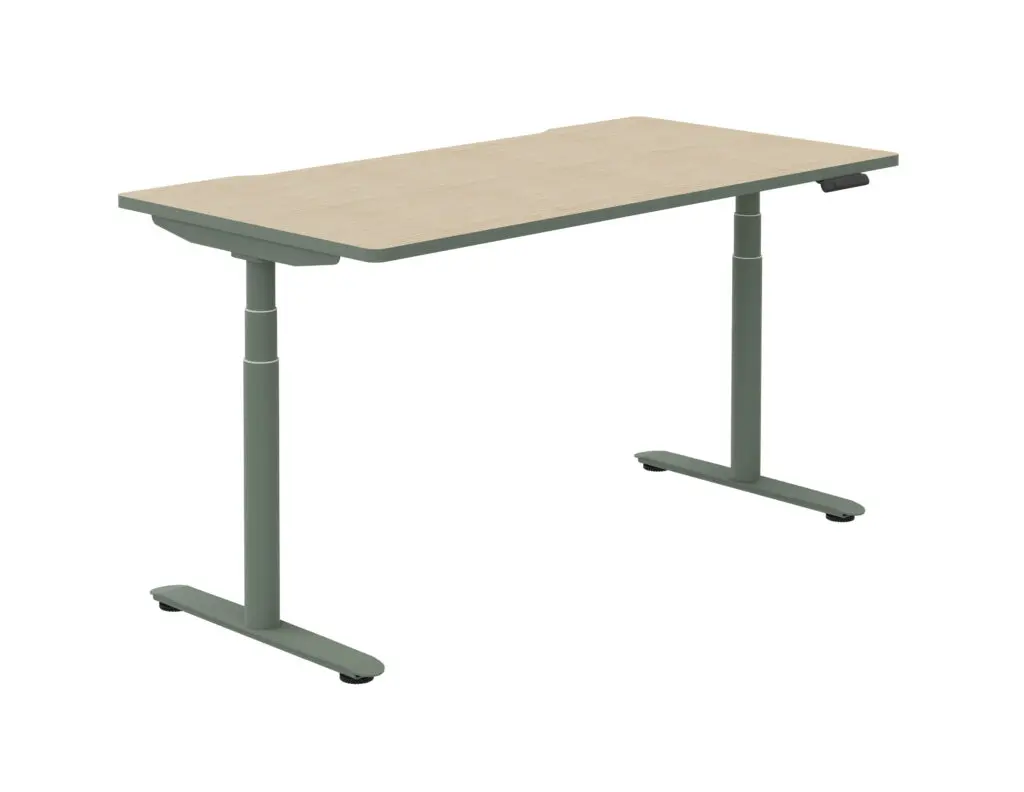
Nuanza RH electric
Electric height-adjustable desk -

Height-settable Astrolite
Height-adjustable desks -

Height-settable Essentiel
Height-adjustable desks -

Envol One
Electric sit-stand desks -

Envol Evo
Electric sit-stand desks -

Height-adjustable Alto
Electric sit-stand desks -

Envol Classic
Height-adjustable desks using a crank
-
-
Single desks
-

Essentiel
Multi-purpose desks -

Retro
Sober and robust desks -

Extensions
Solutions to extend worktops
-
-
Executive desks
-

Astro Executive
Sober Executive desks -

Stricto Executive
Executive desks with character -

Prestige
Sleek executive desks -

Alto Manager
Design Executive Desk -

Envol Manager
Height-adjustable executive desk
-


Frequently Asked Questions
Which should you choose: a sit-stand desk or a traditional desk ?
If you spend less than three hours a day sitting in front of a screen, then a standard desk will be perfectly adequate (for example, Alto or Astro). Between three and six hours a day, a sit-stand desk offers a significant advantage: the ability to vary your posture. We recommend the electric ranges : Envol One, Envol Evo, Alto RH, or the manual ranges: Envol Classique, Essentiel RH, or Astrolite RH.
What is the difference between a desk adjustable by crank and an electric desk ?
A desk adjustable by hand crank has no motor or electronics. Therefore, it consumes no electricity. The mechanism is simple and robust. However, the crank must be turned each time the desk is adjusted. Adjusting the desk takes time and is not instantaneous. It can also sometimes be unpredictable. In contrast, an electric sit-stand desk is equipped with position memory (4 memorizable positions). This is very convenient, especially in an open-plan office, if several people use the same desk.
What is the difference between a collaborative office, an ergonomic office, a classic office and an executive office ?
The classic desk is the simplest choice. The height is fixed. It's suitable for individual use. It offers excellent value for money.
The ergonomic desk, on the other hand, is focused on comfort and health. It is height-adjustable using a crank or electric assistance.
The collaborative office is the preferred choice for shared spaces. It is designed for multiple users and teamwork.
The executive desk is the prestigious and stylish choice . It features higher-end finishes and a large work surface . Furthermore, it is designed to represent a professional role or to receive visitors.
What is the difference between a straight desk, a corner desk, or a bench desk ?
A straight desk is the simplest and most versatile solution: it adapts easily to all environments and is suitable for classic individual workstations.
The corner desk offers an extended surface area and optimizes the use of space by allowing the creation of distinct zones (screen, writing, filing), particularly suitable for workstations requiring multiple activities.
Finally, the bench corresponds to a shared desk, designed to accommodate several users on the same structure: it promotes collaboration, optimizes the available space and fits perfectly into open space or flex office environments.
What size office should I choose?
The size of a professional desk depends on its intended use and the desired level of comfort. For standard use, a width of 120 to 140 cm and a depth of 70 to 80 cm offer a good compromise between footprint and work surface. For optimal comfort, especially with a monitor, documents, or when multitasking, it is best to opt for a desk 160 cm or wider, with a depth of 80 cm. In more limited spaces, more compact sizes can be considered, provided that sufficient surface area is maintained for efficient daily work.
